
In 2018, the North Andover Public School District was awarded a Sustainable Materials Recovery Program (SMRP) Municipal/Regional Grant from the Massachusetts Department of Environmental Protection (MassDEP).
The grant allowed the District to procure signage and other equipment needed to implement waste diversion sorting stations in cafeterias across the district. Today, the district diverts approximately 750 pounds of food scraps and compostable materials, as well as 100 pounds of liquids per day, totaling over 74 tons per year.
A Quick Snapshot of the District’s Impact
- Daily diversion: approximately 750 pounds of food scraps and compostables district-wide.
- Liquids: approximately 100 pounds of liquids diverted per day using 5-gallon pour-off buckets at each school.
- Trash reduction: use about 50 fewer trash bags each week (over 1,800 bags saved annually), resulting in lighter workloads with reduced risk of injury for custodial staff.
- Share tables: active at elementary schools to redirect uneaten food and foster a sense of community.
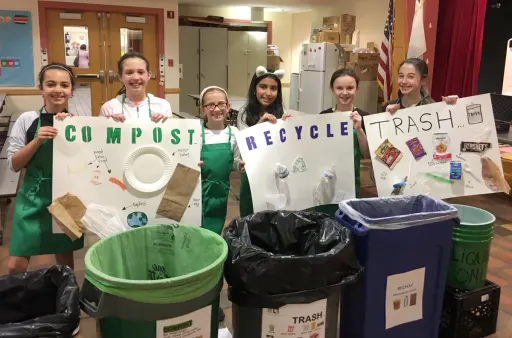
- Student leadership: Green Team volunteers at lunch, with ongoing training and refreshers each fall.
- Garden growth: The compost produced from scraps is returned to school gardens as a soil amendment from Bootstrap Compost, enriching the land and the school’s gardens.
Preventing Wasted Food with Share Tables
North Andover elementary schools offer share tables at the end of the sorting line for students to leave certain food, like unpeeled oranges, that they do not wish to eat. Students are encouraged to take that food from the share table if they are hungry or leave it for the next lunch period. In some cases, cafeteria staff can take back unopened food that can be served to students again, rather than being thrown away.
In previous years, parents led a weekly donation to a local food shelter with additional surplus food. They hope to revive this effort to meet growing food insecurity in the community and the surrounding communities.
Learning to Sort: Peer-to-Peer Training and Leadership
North Andover’s food waste diversion program is hands-on, scalable, and designed to adjust to the needs of the school district.
Key features of the program:
- Training cadence: About 2–3 weeks of daily training per school, held at one school at a time.
- Groundwork: Posters are distributed, the principal presents a school-wide slideshow, and dedicated waste stations are set up before launch.
- Roles: Noon attendants and cafeteria staff are trained, with Green Team volunteers monitoring bins at lunch in pairs.
- Sustainability: The school year begins with quick refresher slides and a re-training effort to get students back on track.
- Leadership development: 5th graders mentor younger students during the initial weeks, building leadership and peer-learning skills.
The Program’s Coordinator, Joanna O’Connell, emphasizes that the approach is largely peer-led. Green Team leaders at each school schedule meetings, manage volunteers, and maintain posters and stations.
Every school is just a bit different from each other, though the main idea is the same— reduce our waste, teach the importance of taking care of the Planet, and share ideas.

Conclusion
The North Andover model demonstrates how student-led program supported by school administrators can drive real, tangible change in school sustainability. North Andover public schools are continually evaluating and improving their process. Regularly tracking the diversion metrics helps ensure they stay on target. North Andover public schools have built a resilient system that teaches students practical skills and cultivates lifelong environmental responsibility.