The Green Team Annual Report 2026
A Year of Student-Led Climate Action
During the 2025–2026 school year, students and educators across Massachusetts turned environmental learning into meaningful action in their schools and communities.
Program Reach
Participation Across Massachusetts
During the 2025–2026 school year, The Green Team brought together students, educators, and school communities from across Massachusetts.
Although the number of registered Green Teams and schools decreased from the previous year, student participation increased by 2.5%, reaching the program’s highest level in the past five years.
Student Participation
Students participated in environmental education and action through The Green Team.
Digital Green Team Kit
Resources to Turn Learning Into Action
All participants received a digital Green Team Kit containing a classroom poster, lesson plans, a press release, and suggested environmental activities.
From Participation to Action
What Green Teams Accomplished
Teachers reported a wide range of student achievements and environmental activities throughout the school year.
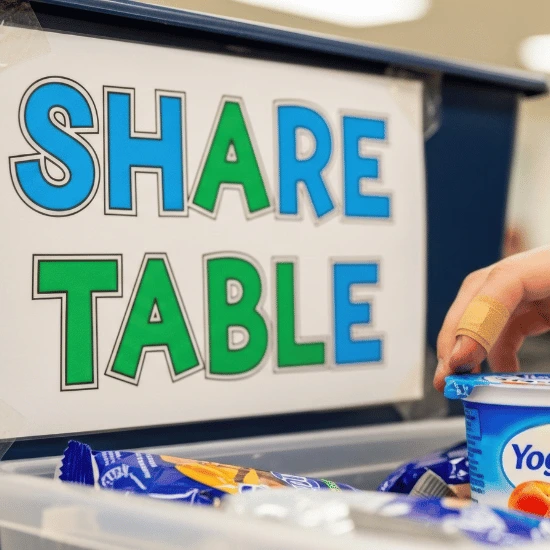
- Reduced wasted food through share tables
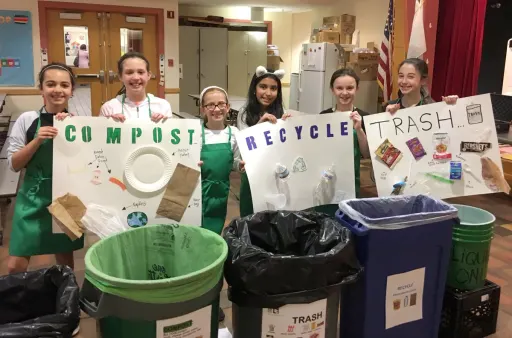
- Diverted wasted food through cafeteria sorting stations
- Grew school pollinator gardens
- Collected textiles for reuse and recycling
- Established idle-free zones
- Switched to reusable serviceware
- Organized community collection events
- Participated in presentations led by environmental experts
- Integrated Green Team lesson plans into project-based learning
Five-Year View
Participation Trends
Program participation from the 2021–2022 through 2025–2026 school years.
| Participation | 2021–2022 | 2022–2023 | 2023–2024 | 2024–2025 | 2025–2026 |
|---|---|---|---|---|---|
| Green Teams | 221 | 280 | 359 | 484 | 445 |
| Schools | 201 | 246 | 320 | 441 | 417 |
| Students | 41,320 | 60,096 | 55,935 | 67,102 | 68,766 |
| Response Forms | 27 | 49 | 65 | 94 | 75 |
| Response Rate | 12% | 18% | 18.1% | 19.8% | 18% |
Leader Response Form submission rate is based on the 426 Green Teams registered by the response form deadline. Environmental Justice Communities are identified by MassDEP.
Student-Led Impact
Environmental Learning in Action
Green Team students moved beyond the classroom by applying what they learned through hands-on environmental projects in their schools and communities.
Teachers reported achievements spanning wasted food prevention, composting, recycling, reuse, gardening, pollution prevention, and community engagement.
Our students and school community benefited in many meaningful ways from these activities. These experiences not only built environmental awareness, but also fostered collaboration, creativity, and a strong sense of community pride.
Wasted Food Prevention & Composting
Students created share tables, operated cafeteria sorting stations, expanded composting programs, and learned why food should not be treated as trash.
Better Sorting & Recycling
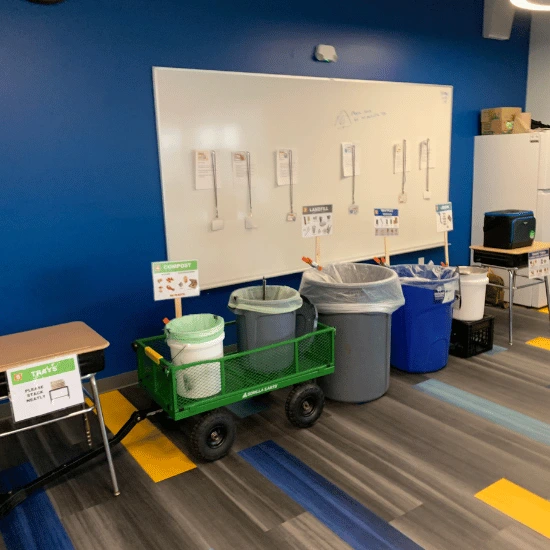
Green Teams launched and strengthened school recycling programs, managed cafeteria sorting stations, created educational signage, and taught classmates how to recycle correctly.
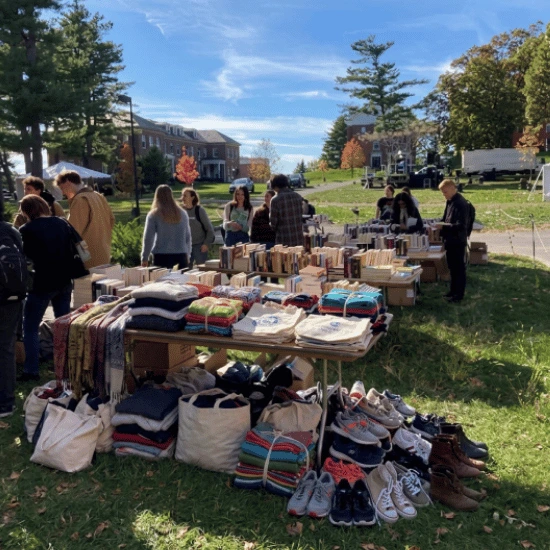
Reuse, Donation & Textiles
Students organized textile and sneaker collections, donation programs, thrift events, upcycling projects, and initiatives that replaced single-use items with reusable serviceware.
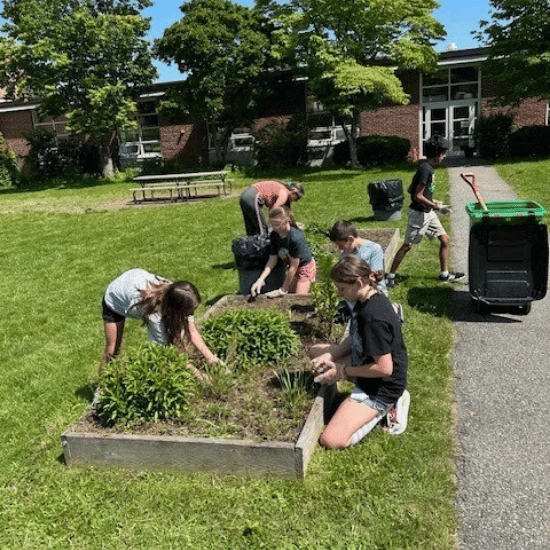
Gardens & Healthy Habitats
Schools grew vegetable, herb, native plant, and pollinator gardens while learning about regenerative agriculture, biodiversity, compost, and climate-resilient food systems.
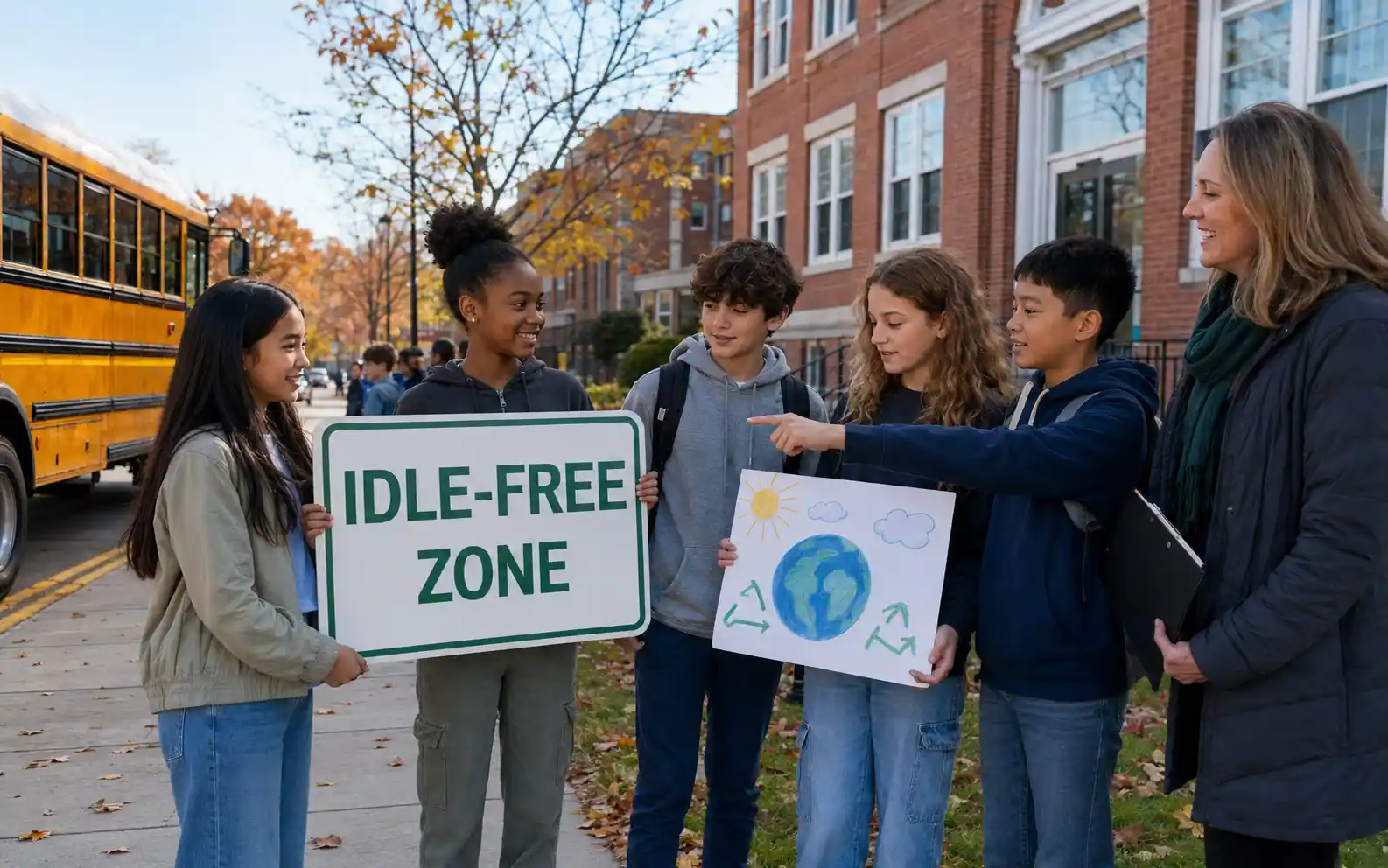
Idle Reduction & Energy Conservation
Green Teams established idle-free zones, promoted cleaner air around school campuses, and helped students understand how everyday energy choices affect the environment.
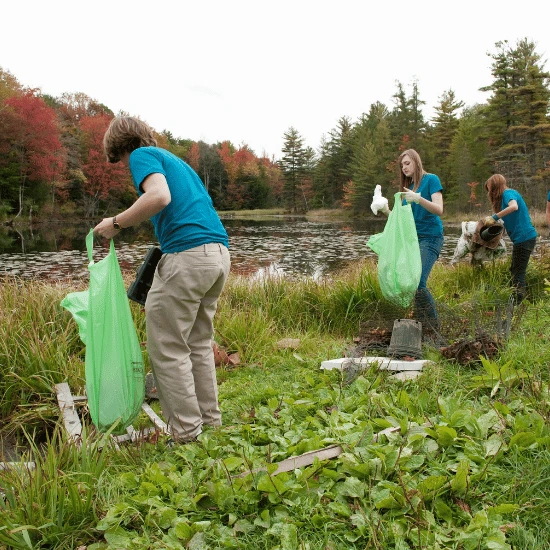
Community Action & Leadership
Students organized community collections and cleanups, participated in local environmental events, met with experts, collaborated with municipal leaders, and presented their work to wider audiences.
Examples reflect activities and outcomes reported by participating Green Team leaders during the 2025–2026 school year.
Statewide Connections
Outreach, Partnerships & Learning
Throughout the year, CET conducted statewide outreach to increase participation in The Green Team and strengthen its network of program partners and supporters.
Outreach included virtual meetings, in-person presentations, conferences, electronic communications, and direct engagement with organizations and municipal representatives working with K–12 schools.
Expanding the Network
Reconnecting Schools With The Green Team
Midway through the school year, CET reached out directly to teachers who had participated in previous years but had not yet registered for the 2025–2026 program.
Registrations remained open through June 15, 2026.
Green SWoRD
School Waste Reduction & Diversion
CET represented The Green Team in quarterly stakeholder meetings and added a Green SWoRD landing page to the program website, making school waste-reduction resources easier to access.
Explore Green SWoRDRecycle Smart MA
Interactive Recycling Education
CET promoted the Recycle Smart MA quizzes to The Green Team network, collected surveys from participating teachers, and mailed vinyl water-bottle stickers directly to participating schools.
Visit Recycle Smart MAConferences & Workshops
Meeting Educators and Partners Across Massachusetts
CET shared Green Team resources and school waste-diversion best practices at six statewide events.
MFAA–MASBO Annual Conference
CET tabled alongside MassDEP to share recycling and composting equipment resources and school waste-diversion best practices.
Massachusetts Health Officers Association Conference
CET exhibited and presented in Falmouth, sharing RecyclingWorks MA and Green Team resources with municipal representatives and public health professionals.
Massachusetts Environmental Education Society Conference
CET connected with environmental extracurricular programs, camps, special programs, educators, and schools.
MassRecycle Annual Conference & Trade Show
CET shared information about equipment, educational resources, and technical assistance available to K–12 schools.
Springfield Farm to School Summit
CET hosted an exhibitor table and connected with teachers interested in starting and expanding environmental initiatives at their schools.
Massachusetts Farm and Sea to School Conference
CET led a workshop on wasted food prevention, source separation, and school composting.
Equipment & Materials
Tools That Help Schools Take Action
To support waste diversion and idling-reduction efforts, MassDEP provides recycling, composting, and clean-air equipment and materials to Green Team participants upon request.
These resources help schools launch new programs, improve existing systems, and turn environmental education into everyday action.
A More Accessible Distribution System
Equipment Delivered Directly to Schools
CET drop-shipped requested equipment directly to schools instead of requiring Green Team leaders to travel to a distribution location.
The easier distribution process may have contributed to the increase in schools requesting and receiving equipment this year.
Waste Diversion
Recycling & Composting Equipment
Schools received containers, bins, carts, and composting resources to support new and existing waste-diversion programs.
Cleaner Campus Air
Idle-Reduction Signs & Materials
Five schools requested idle-reduction materials. Three of those schools were interested in starting new idle-reduction programs.
No five-minute idling-limit signs, bumper stickers, or school-bus dashboard stickers were distributed in FY26.
Five-Year View Equipment Distribution Trends
Recycling & Composting Equipment
Equipment distribution from 2021–2022 through 2025–2026.
| Equipment | 2021–22 | 2022–23 | 2023–24 | 2024–25 | 2025–26 |
|---|---|---|---|---|---|
| Schools Receiving Equipment | 23 | 30 | 38 | 16 schools 3 districts | 37 schools 1 district |
| New Programs | 6 | 7 | 16 | 14 | 20 |
| Set-Out Containers | 417 | 404 | 685 | 457 | 545 |
| Recycling Desk-Side Bins | 65 | 491 | 452 | 252 | 439 |
| Recycling Carts | 45 | 77 | 115 | 111 | 15 |
| Compost Bins | 4 | 31 | 34 | 30 | 26 |
| Worm Vouchers | 7 | 13 | 9 | 11 | 16 |
The FY26 school district represents 27 combined schools. “New Programs” includes new recycling and/or composting programs.
Idle-Reduction Materials
Material distribution from 2021–2022 through 2025–2026.
| Material | 2021–22 | 2022–23 | 2023–24 | 2024–25 | 2025–26 |
|---|---|---|---|---|---|
| Schools Receiving Materials | 7 | 16 | 11 | 10 | 5 |
| New Programs | 5 | 9 | 5 | 8 | 3 |
| Idle-Free Zone Signs | 12 | 61 | 63 | 105 | 26 |
| Five-Minute Idling-Limit Signs | 10 | 33 | 12 | 4 | 0 |
| Pledge Cards | 800 | 650 | 900 | 330 | 10 |
| Static Windshield Decals | 250 | 450 | 835 | 1,100 | 350 |
| Bumper Stickers | 600 | 350 | 594 | 540 | 0 |
| School-Bus Dashboard Stickers | 250 | 350 | 27 | 500 | 0 |
| Palm Cards | 800 | 600 | 1,565 | 500 | 1,020 |
Awards & Recognition
Celebrating Green Team Achievements
Green Team leaders submitted the climate action, waste-reduction, and clean-air activities their students completed during the 2025–2026 school year.
CET sent Earth Day stickers, award letters, and Certificates of Recognition to all 75 Green Teams that submitted Leader Response Forms.
Statewide Recognition
75 Green Teams Recognized
Award recipients included grand-prize winners representing MassDEP’s eight Municipal Assistance Coordinator regions, Green Teams recognized for specific areas of environmental action, and additional classes honored for their work.
Grand-prize e-gift cards could be used for a celebration or equipment supporting each school’s Green Team program.
The community service aspect of the drives is incredible. The kids feel a tremendous sense of accomplishment, as well as feeling as if they are truly making a difference in someone’s life.
Highest Recognition Eight Grand-Prize Winners 8 schools
English High School
Green Team Leader: Thomas Hayes
Students focused on zero-waste initiatives and environmental justice topics, including tree equity in their community.
St. Mary’s High School
Green Team Leader: Stacy Drector
Students organized sneaker drives, supported a community refrigerator, created educational posters, and learned about anaerobic digestion through Vanguard Renewables.
James S. Daley Middle School
Green Team Leader: Kara Mandeville
Students held an Upcycle Fashion Show, promoted Trash-Free school days, organized campus cleanups, and created recipes inspired by their school gardens.
Mullen-Hall School
Green Team Leader: Shannon Carlson
School-wide composting, recycling, and reuse programs diverted 250 pounds of food scraps each month. The resulting compost supported the school’s gardens.
Norwood High School
Green Team Leader: Allison Leichtman
Students organized reuse and thrift events, joined local sustainability work, promoted reusables, and raised funds to support access to clean water.
Brockton High School
Green Team Leader: Eleri Merrikin
Students explored regenerative gardening, created multilingual recycling materials, grew native pollinator plants, and began developing a wasted food reduction initiative.
Milford High School
Green Team Leader: Nathan Gaucher
Students started a school-wide bottle and can recycling program while building practical skills connected with environmental careers.
HEC Academy
Green Team Leader: Amy Stamm
Students collaborated with the city on reuse, donation, and repair; presented at the Massachusetts Farm and Sea to School Conference; and advocated for climate-resilient local food systems.
Environmental Leadership Focus-Area Award Winners 24 schools
- Roberta G. Doering School Agawam · Tammy Rumplik · Grades K–5 Energy, Idle Reduction & Transportation
- Andover High School Andover · Melanie Cutler · Grades 9–12 Activism & Civic Engagement
- Ottoson Middle School Arlington · Rachel Oliveri · Grades 6–8 Activism & Civic Engagement
- Chicopee High School Chicopee · Joanna Forge’t · Grades 9–12 Recycling
- Cohasset High School Cohasset · Pete Afanasiw · Grades 9–12 Textiles
- Charlotte A. Dunning Elementary School Framingham · Shannon Pierson · Grades K–5 Activism & Civic Engagement
- Lee Elementary School Lee · Paula Duhon · Grades K–5 Reuse & Prevention
- Leicester High School Leicester · Kimberly Russo · Grades 9–12 Wasted Food Diversion & Composting
- William Diamond Middle School Lexington · Christine Goulet · Grades 6–8 Activism & Civic Engagement
- Harrington Elementary School Lexington · Abby Brayton-Chung · Grades K–5 Textiles
- Beebe School Malden · Michelle Corbett · Grades 6–8 Recycling
- Furnace Brook Middle School Marshfield · Chris Casavant · Grades 6–8 Reuse & Prevention
- Mashpee Middle-High School Mashpee · Shona Vitelli · Grades 6–8 Gardening
- Manchester Essex Regional High School Manchester-by-the-Sea · Keith Hartan · Grades 9–12 Gardening
- Dale Street School Medfield · Bethany Sager · Grades K–5 Recycling
- Comprehensive Grammar School Methuen · Sarah Foley · Grades 6–8 Energy, Idle Reduction & Transportation
- Horace Mann Newtonville · Julie Ferland · Grades K–5 Food Donation & Share Tables
- F. A. Day Middle School Newtonville · Taylor Cohen · Grades 6–8 Textiles
- Oak Hill Middle School Newton Centre · Janette Patel · Grades 6–8 Food Donation & Share Tables
- Newton South High School Newton Centre · Andrew Thompson · Grades 9–12 Food Donation & Share Tables
- Norwood Montessori School Norwood · Tamiko Porter · Grades K–5 Wasted Food Diversion & Composting
- Emma L. Miller Elementary School Savoy · Brian Keller · Grades K–5 Gardening
- Stoughton High School Stoughton · Jennifer Kelly · Grades 9–12 Reuse & Prevention
- Innovation Academy Charter School Tyngsboro · Anna Cynar · Grades 6–8 Wasted Food Diversion & Composting
Certificates & Earth Day Stickers Additional Green Team Classes 43 classes
Each participating student in these 43 Green Team classes received an Earth Day sticker for a reusable water bottle.
- Abington Middle SchoolAbington · Lauren Peruzzi · Grade 7
- Acton-Boxborough Regional High SchoolActon · Nancy Young · Grades 9–12
- Stratton Elementary SchoolArlington · Tammy Luk · Grades K–4
- Bedford High SchoolBedford · Ashley Martell · Grades 9–12
- Lt. Job Lane Elementary SchoolBedford · Jamie Nolan · Grades 3–5
- Lt. Eleazer Davis Elementary SchoolBedford · Erin Dorr · Grade 2
- Bellingham High SchoolBellingham · Linda Cartier · Grades 9–12
- Ayers Ryal Side Elementary SchoolBeverly · Jordan Ciaramitaro · Grades 3–4
- Cove Elementary SchoolBeverly · Rebecca Hardenstine · Grade 2
- Blanchard Memorial SchoolBoxborough · Leanne Berggrun · Grades K–6
- Youth Center Inc.Cheshire · Monica Carpenter · Grades PreK–8
- East Falmouth Elementary SchoolEast Falmouth · Rosemary Moran · Grade 4
- Meadow Brook Elementary SchoolEast Longmeadow · Elizabeth Bone · Grade 3
- Riverview SchoolEast Sandwich · Chris Pino · Grades 6–12
- South Shore Christian AcademyEast Weymouth · Jill Stiles · Grades 10–12
- Brookside Intensive Treatment UnitGreat Barrington · Cindy Konrad · Grades 7–9
- Newton Elementary SchoolGreenfield · Miriam Robinson · Grades K–4
- Federal Street SchoolGreenfield · Miriam Robinson · Grades K–4
- Center SchoolLongmeadow · Valerie Brown · Grades 3–5
- Bartlett Community Partnership SchoolLowell · Jo Anne Downing · Grades PreK–8
- The BRIDGE ProgramLowell · Carla Couilliard · Grades 6–8
- Francis T. Bresnahan Elementary SchoolNewburyport · Katara Harding · Grade 1
- Bigelow Middle SchoolNewton · Crista Cavicchio · Grade 6
- Lincoln-Eliot Elementary SchoolNewton · Jennifer Monopoli · Grade 4
- Memorial Spaulding Elementary SchoolNewton Centre · Alexandra Etscovitz · Grades K–5
- John Ward Elementary SchoolNewton Centre · Susan Tempesta · Grades K–5
- Underwood Elementary SchoolNewton Corner · Jean Van Putten · Grades K–5
- King Philip Regional Middle SchoolNorfolk · Michelle Kreuzer · Grade 7
- North Andover High SchoolNorth Andover · Sarah Vaudo · Grades 9–12
- Atkinson Elementary SchoolNorth Andover · Mandi Imasogie · Grades 1–5
- North Andover Middle SchoolNorth Andover · Erien Gordon · Grades 6–8
- North Falmouth Elementary SchoolNorth Falmouth · Jenna Clark · Grade 3
- Captain Samuel Brown Elementary SchoolPeabody · Diane Bugler · Grade 5
- Pembroke High SchoolPembroke · Mary Lafond · Grades 9–12
- Dennis-Yarmouth Regional High SchoolSouth Yarmouth · Emma Ethier · Grades 10–12
- Joseph G. Luther Elementary SchoolSwansea · Scott Sunaz-Lods · Grades 3–5
- Greater Lowell Technical High SchoolTyngsborough · Dani Jo White-Yelito · Grades 9–12
- Dual Language SchoolWaltham · Deanna Hoffman · Grades 4–5
- Quaboag Regional High SchoolWarren · Sibilla Flannery · Grades 9 & 12
- J. R. Lowell Elementary SchoolWatertown · Elizabeth Kaplan · Grade 5
- Stony Hill Elementary SchoolWilbraham · Christine Goonan · Grades 2–3
- Ambrose Elementary SchoolWinchester · Anne Brown · Grades K–5
- Lynch Elementary at Parkhurst SchoolWinchester · Naomi Magnoni · Grades K–5
MassDEP published a press release showcasing the accomplishments of the 2025–2026 Green Teams. The announcement was shared through The Green Team website, newsletters, social media, and newspapers across the Commonwealth.
Digital Impact
A More Connected Green Team
The Green Team website, digital resources, and program management systems helped educators access materials, communicate with program staff, and report the environmental work happening in their schools.
Throughout the year, CET continued improving the digital systems used to manage registrations, distribute resources, support participants, and share Green Team achievements.
Website Engagement
Website Views
Educators, students, and community members used the Green Team website to find program information, environmental resources, and school stories.
FY26Five-Year View Website Engagement Trends
| Metric | FY22 | FY23 | FY24 | FY25 | FY26 |
|---|---|---|---|---|---|
| Views | 33,953 | 21,821 | 31,564 | 56,408 | 46,133 |
| Users | 28,244 | 17,439 | 13,972 | 11,339 | 8,521 |
| Page Views | 51,337 | 35,593 | — | 25,225 | 16,821 |
| Views per User | 1.51 | 1.72 | 2.26 | 2.23 | 5.42 |
| Average Visit Duration | 0:59 | 1:11 | 2:12 | 5:43 | 6:18 |
| New Visits | 90.6% | 90.2% | — | 93.1% | 98.84% |
Beginning in July 2023, Google Analytics 4 simplified several analytics categories, adjusted user information, and combined certain session and view measurements. Comparisons between years should therefore be interpreted with this methodology change in mind.
Program Administration
Building a Smarter Program Infrastructure
CET used its digital systems to coordinate program participation, distribute resources, manage reporting, and keep Green Team information current.
Registration Management
Managed Green Team registrations and participant information through Salesforce.
Digital Kit Distribution
Sent digital Green Team Kits and program resources directly to registered educators.
Equipment Coordination
Collected equipment requests and forwarded them to MassDEP for fulfillment and distribution.
Participant Support
Responded to educators and maintained the program’s database of participating schools.
Recognition and Reporting
Collected Leader Response Forms and prepared digital Certificates of Recognition.
Website Information
Updated the participating schools list and interactive map throughout the 2025–2026 school year.
Special Projects
School Stories Worth Sharing
Four school spotlights documented how Green Teams transformed environmental education into leadership, collaboration, and measurable community action.
Bromfield School Spotlight
Read the spotlight 02 East Longmeadow, MassachusettsEast Longmeadow Public Schools Spotlight
Read the spotlight 03 Northampton, MassachusettsHEC Academy School Spotlight
Read the spotlight 04 North Andover, MassachusettsNorth Andover Public Schools Spotlight
Read the spotlightVoices from The Green Team
What Green Team Leaders Saw
Green Team leaders described how environmental activities helped students build knowledge, confidence, responsibility, and a stronger connection to their schools and communities.
The reflections below were submitted through the 2025–2026 Green Team Leader Response Form.
They became environmental stewards, sharing what they learned with peers and family members/larger community. Instilled lifelong appreciation and duty to environmental stewardship spark new curiosity and interest in their role in the larger climate resiliency efforts.
The community service aspect of the drives is incredible. The kids feel a tremendous sense of accomplishment as well as feeling as if they are truly making a difference in someone's life.
Awareness and individual responsibility have increased throughout the building; staff & students alike.
Leader Reflections
Explore More Green Team Voices
Open each theme to read how students benefited from environmental learning and action across Massachusetts.
Environmental Awareness & Learning How students developed a deeper understanding of their environmental impact.
Talking and learning about how to protect the Earth is so important and if we want to help protect this planet, we need to teach the next generations how to take care of it.”
They became environmental stewards, sharing what they learned with peers and family members/larger community. Instilled lifelong appreciation and duty to environmental stewardship spark new curiosity and interest in their role in the larger climate resiliency efforts.
We are helping to educate students about the environmental crisis and how to live a more sustainable, eco-friendly lifestyle to help the world around us!
Student Leadership & Confidence How Green Team activities helped students advocate, collaborate, and lead.
Our students felt like activists in their school because they advocated more Green Practices in school.
The students had a sense of ownership and pride
Students are becoming more cognizant of the dangers of fast fashion. They are taking a leadership role in promoting recycling in the community.
Recycling, Composting & Wasted Food How students improved sorting systems and reduced discarded materials.
Students have learned about how to compost and why we compost. We've reduced the amount of wasted food and packaging that either ends up in our landfills/incinerators or is trucked to other states.
The school benefits by reducing trash through composting in the cafe. Our students diverted 1000 pounds of waste from the landfill by composting.
The Green Team participants have become fierce advocates for encouraging recycling and composting efforts in our school. They have learned about the impact they are making by encouraging our entire school to be conscientious about recycling and reducing our waste. They have also gained a lot of self-confidence by leading these efforts.
Gardens & Outdoor Learning How outdoor spaces connected environmental learning with hands-on experience.
The toner recycling rebates helped fund the purchase of supplies for the gardens. The clean courtyard provides an outdoor classroom and lunchtime space. Getting hands in the dirt is always beneficial for kids!
The students on the 5th Grade Student Council Sustainability Team learned about how hydroponic gardening works and were able to enjoy the fruits, or rather lettuce, of their labor! The entire school ate lettuce and basil as part of their school lunch. The student population, as well as families, were educated on various sustainability issues, including reducing emissions, textile recycling, and composting at home and at school.
The students benefited by having hands in the dirt, growing veggies, eating them
School Culture & Community Engagement How student action influenced schools, families, and local communities.
AHS Environmental Club students learned a lot from talking with various local environmental groups this year. They helped them with some of their efforts and learned about local action and advocacy.
The community service aspect of the drives is incredible. The kids feel a tremendous sense of accomplishment as well as feeling as if they are truly making a difference in someone's life.
Each activity that we have set up helps us build, teamwork, accountability, cooperation, respect for others, and our environment, and shows us all how important it is to not just take care of ourselves, but our environment around us. Not just do we as staff and students benefit from a clean environment, but all of our animals and plants as well.
Complete Appendix · 75 Responses Green Team Leader Response Form Feedback
Responses are presented alphabetically by school. Minor spacing and punctuation have been standardized for readability.
We are more aware of compost, nitrogen, and recycling.
Students gained an appreciation and in-depth understanding of how much recycling the school generates and the significant role they play in contributing towards our school's status as a sustainable school. Students also benefit by making new friends and feeling gratified that they are working for the planet.
Talking and learning about how to protect the Earth is so important and if we want to help protect this planet, we need to teach the next generations how to take care of it.”
AHS Environmental Club students learned a lot from talking with various local environmental groups this year. They helped them with some of their efforts and learned about local action and advocacy.
The students are very interested in helping the Earth and have become quite passionate about the cause. They are eager and are hopefully taking this enthusiasm back home and into their own homes.
Students got to teach the school that we can recycle cans, plastic, and paper together (in our district, we used to sort it all!)
We have created a culture of recycling in our building. Students learn what and cannot be put into recycling. Everyone does their part, but we have some standout student leaders in the buildings.
The toner recycling rebates helped fund the purchase of supplies for the gardens. The clean courtyard provides an outdoor classroom and lunchtime space. Getting hands in the dirt is always beneficial for kids!
It gives ownership of the building to the students. It also makes them more aware of the amount of trash that is generated.
Helping the planet by recycling.
Leadership and learning!
Our Green Team student leaders worked to lead our whole school community with waste reduction and composting. They also started an initiative to collect houseplants from our community and distribute them to all the staff members and classrooms in the building. We're using compost as part of the planting progress and providing education about how composting benefits us and our environment.
We had our City Recycling Manager in for a presentation and then the students created social media posters in multiple languages around the do's and don'ts of single stream recycling, we setup two popup classrooms for teachers to sign out and take their classes out to enjoy green spaces around campus. We run a spring plant sale and will be selling the plants we have grown in our school greenhouse including native pollinator hosts and food plants so that all members of our community can improve their habitat.
It helps them to see that nature takes time and that slowing down and observing things is a great way to learn and appreciate things around them.
Students learned about what can and cannot be recycled. They worked with the school custodial staff to coordinate recycling goals. Researching and growing worms made students aware of methane gas issues.
Our students and school community benefited in many meaningful ways from these activities. By using the Recycle Smart Quiz to create an informative display, students helped educate others and increased awareness about proper recycling practices. Partnering with Freya to pursue a Wasted Food Assessment has given students a real-world opportunity to problem-solve and take action around reducing waste in our school. (The assessment hasn't happened yet, but we are still trying!) Inspired by ideas from Recycle Day, our entire school came together for a Thanksgiving parade featuring floats made from recycled materials thanks to the creativity and leadership of our Explorers teacher, Jenny Serafino. These experiences not only built environmental awareness, but also fostered collaboration, creativity, and a strong sense of community pride.
We do a carbonated beverage drive to support "Cans for Calcium" and donate all cans every other week. Kids were shocked by the energy savings by just changing a light bulb; a lot of great conversations were having! Stewardship, responsibility, socially made new friends and kept our school area beautiful
Students learned that each one of us can make a positive difference in our world.
The community service aspect of the drives is incredible. The kids feel a tremendous sense of accomplishment as well as feeling as if they are truly making a difference in someone's life.
Because we are a therapeutic special education high school, we are unique in the flexibility of our programming and our hands-on curriculum, which have enabled students to collaborate with several community organizations on environmental projects. We have been able to continue to expand our green culture through student, community, and teacher initiatives. This year two teachers participated in a yearlong professional development series with Mass Farm to School focused on designing food-based civics projects. Students have benefited from their environmental activities in multiple ways. First, students have grown in confidence and have realized the power of their voices. Three student panelists presented their flood mitigation civics project on a panel for the Mass Farm and Sea to School Conference on March 18, 2026. One student said, “We got to see what other people are doing and tell them what we're doing as a school, and that felt good. Presenting at the conference helped raise my mood and spread awareness about the climate problems affecting farms. The students received excellent feedback from workshop participants and have been extra motivated now in interviewing GFN staff members and local officials for their civics project. Educating others and researching interview questions related to their flood mitigation project has given students a sense of empowerment about their positive contributions to and impact on the larger community. The sense of community HEC students has built in their shared creation of a green school culture is evident in a thousand ways. It's a regular sight to see a student collecting cans from one of the marked bins around the school, bringing food scraps out to the compost bin, or collecting reusable cups from one of the water fountains. On a recent morning, a student expressed to Glee that he had educated one of his teachers on the recyclability of a milk carton. Students have taken direct, local actions to address climate change and have felt proud that they have had a hand in creating a culture of reuse, recycling, and environmental responsibility. The Friends of Northampton Trails, The Northampton ReUse Committee, the Huntington Village Closet, Catholic Charities, Manna Community Kitchen, and Kiwanis have all given our students encouraging feedback and shown them how valuable their efforts are. Relationship and/or community building has been a central benefit of HEC’s Green Team efforts. Third, students have built skills and learned how to educate others on these skills: knowledge about ecological technologies, wasted food, recycling, growing and harvesting food through our school garden, etc.; communication and graphics (advertising events, making composting and recycling posters, etc.); leadership and project management skills; collaboration and relationship-building skills; etc. Older students mentor newer students as they work together on cooking, planting our garden, volunteering in the community, or otherwise working toward a greener future. Overall, students have taken an increasing sense of leadership and responsibility for environmental education and action, and they have incorporated green values into their own sense of self. They have built green habits, like bringing thermoses to events, redistributing or composting uneaten food, recycling more products, working together to design new resource-preserving projects, and helping new students to understand how to be a part of our school community. All of these habits have contributed to our students' identity as climate change activists and organizers.
Our students felt like activists in their school because they advocated more Green Practices in school.
Students gained a better understanding of recycling and the many ways to reduce, reuse, and recycle.
The school benefits from the Green Team because staff members know who they can reach out to for help emptying recycling bins. Green Team members help keep our recycling bins free from contaminants.
We share positive feedback from community members, school members, and students that this is really improving our school and climate. We have started two new courses (Farm to Table and Landscape Horticulture) and also have begun work on a new Environmental Pathway for our school to career program!
The water fountains will be huge! Fingers crossed; they are installed as planned. The kids felt really special about meeting with the Assistant Superintendent and getting this done.
Learning to contribute to the school community and collaborate with the adult teams. Organizing a school wide clean up
The students benefited from each lesson that was taught this school year.
I think many students were happy to learn about how these issues affect their lives
Students learned how to recycle correctly, recycle and reuse art materials, and the importance of donating clothing and food!
The students showcased their gained knowledge of conserving energy through creating posters and writings.
They became environmental stewards, sharing what they learned with peers and family members/larger community. Instilled lifelong appreciation and duty to environmental stewardship spark new curiosity and interest in their role in the larger climate resiliency efforts.
They learned a lot of things they didn't know about the environment. They also had a sense of accomplishment, as they made upcycled items (like keychains made from plastic bags!) and sold them to raise money for our club. They read morning announcements and created informational slides to educate the school.
These activities strengthened both environmental awareness and student engagement. Students became more consistent and accurate about recyclers, and teachers noticed fewer contaminated bins. The posters students created helped build a more environmentally conscious culture across the school. The hands-on science work supported a wide range of learners, especially multilingual learners and students who thrive with tactile, visual, and collaborative tasks. Many students who struggle with traditional academic work were able to shine during planting, sorting, or lab-based activities, which boosted their confidence and sense of belonging in science.
The students on the 5th Grade Student Council Sustainability Team learned about how hydroponic gardening works and were able to enjoy the fruits, or rather lettuce, of their labor! The entire school ate lettuce and basil as part of their school lunch. The student population, as well as families, were educated on various sustainability issues, including reducing emissions, textile recycling, and composting at home and at school.
The students had a sense of ownership and pride
Students have learned about how to compost and why we compost. We've reduced the amount of wasted food and packaging that either ends up in our landfills/incinerators or is trucked to other states.
Leadership and environmental stewardship skills are important!
Our school benefited by utilizing our outdoor garden space for science curriculum activities throughout each grade level as well as benefiting from having a clean and safe space for outdoor games. Our school benefits as well by providing fresh produce to staff and students who may not have the resources to become independent.
Awareness and individual responsibility have increased throughout the building; staff & students alike.
The garden helps our students with disabilities as either a way to feed their sensory diet or an incentive.
The students learned about worm composting and how to care for the worms
Benefits to school and community: Waste: Thousands of pounds of food scraps diverted from landfills. Education: K-6 students graduate with a functional understanding of sustainability. Ecology: A growing "urban forest" thanks to student tree-planting efforts. Intergenerational Connections: students work with volunteers in both the garden and planting the trees. Local Food Insecurity: The garden provides a source of fresh, nutritious produce for families. In an era of rising food costs, having a community-maintained harvest ensures that fresh vegetables are accessible to those who might need them most.
Our school embraced the activities and programs. We reinstituted a paper recycling program that had been dormant at our school for years. Teachers and staff were eager to participate, and our students were administrators and facilitators of the programs. The highlight this year was the composting program. We received the materials from your program, and the students were very eager to make this a campus wide program, involving waste from our Culinary Program and our Cafeteria as well as sharing our composting with our Building Property and Maintenance CTE program to enrich our campus gardens. It has benefited our school culture and given our students some much needed campus pride.
Fourth grade students created an educational video about recycling and reused items and then presented to the entire school community.
The students benefited by having hands in the dirt, growing veggies, eating them
The students benefited from the learning, connecting, and education
Redirected compostable items to our town digester rather than going to the trash.
Students gained hands-on experience across a wide range of environmental and scientific disciplines – From ecology and botany to water quality analysis and food systems. Working on the native pollinator garden, seed balls, and plant cuttings built real horticultural skills, while analyzing water quality data from Manchester and Essex introduced genuine scientific inquiry. The coloring book project developed communication and creative skills, and discussing microplastics analysis exposed students to cutting-edge environmental research methods. The school as a whole benefited in multiple tangible ways: the revamped greenhouses and Tower Gardens expanded the school's growing infrastructure; the learning commons were beautified with propagated plants; and students in the building had access to fresher, greener spaces. The clothing and book donation bins also gave the broader school community an easy way to participate in sustainability.
Everyone in our school can benefit from the vernal pool and all students have the ability to compost in our cafeteria.
Learn how to separate waste and use the compost delivered back to plant beds.
With this new lens, we have inspired a reduced waste, experienced making art from "trash” and learned about consumption.
I learned that we are helping the environment. Learn about what happens if these items enter the environment. Teach some job/vocational skills
We have reduced the amount of trash by having an average of 250 pounds of compost collected each month in our cafeteria and recycling an average of 8 bins of recycling materials. Our PTO has sponsored a recycling textiles deposit site on our school property as well. The compost is then used in our outdoor learning space and gardens.
The students showcased their gained knowledge of conserving energy through creating posters and writings.
We raised awareness about textile waste and ways to reduce it, while simultaneously finding new homes for hundreds of items of clothing. We are raising awareness about wasted food and ways to reduce it, while also fighting hunger in our community. Students will leave Earth Day more aware of local groups they can join, ways they can take action, and why these issues matter- this year, our Earth Day event will also aim to have more hands-on activities and will aim to raise awareness about jobs/internships in the field.
The school benefits by reducing trash through composting in the cafe. Our students diverted 1000 pounds of waste from the landfill by composting.
Increasing awareness of the benefits of composting is important.
The Green Team participants have become fierce advocates for encouraging recycling and composting efforts in our school. They have learned about the impact they are making by encouraging our entire school to be conscientious about recycling and reducing our waste. They have also gained a lot of self-confidence by leading these efforts.
We are helping to educate students about the environmental crisis and how to live a more sustainable, eco-friendly lifestyle to help the world around us!
The children have really learned a lot about making better food choices; they are becoming great cooks, and they love finding recipes! We have also made friends with some local farms and started setting up swaps to get more fresh food for our community!
We reduced wasted food in our school.
I think the students, staff, and school community benefited greatly from all of these activities as they engaged more with local environmental concerns and how they could take action to make a difference and some of the team's actions (like litter cleanups and removing invasive plants) directly improve the school grounds.
We have significantly increased the amount of recycling that is done in our school.
Students learned that everyone could reduce wasted food and compost, even in their own backyards.
Heather is leading a group of students through the regulatory compliance process with our school and town to launch a wasted food initiative.
Students learned a lot, presented their ideas to others, and the school looked nice with the halls decorated with student work as well.
They love working together and helping the environment. They are more aware of where recycling v. trash should go.
Students benefit by seeing how their acts of generosity, kindness, and energy saving ideas can help their school and community.
Students benefited by understanding every little bit we do help our planet. They also used their engineering design steps to solve problems in their own neighborhoods.
Students are becoming more cognizant of the dangers of fast fashion. They are taking a leadership role in promoting recycling in the community.
Our students learned how to grow their own food and how to care for the planet in different ways.
It got our students involved in an activity they never did.
Each activity that we have set up helps us build, teamwork, accountability, cooperation, respect for others, and our environment, and shows us all how important it is to not just take care of ourselves, but our environment around us. Not just do we as staff and students benefit from a clean environment, but all of our animals and plants as well.
Became more aware how actions impact the Planet and how they can make a difference -Taught them about a hero, Jane Goodall, and inspired others to make change -Taught others about the dangers of anticoagulant rodenticides and impacts on the environment -Ran the waste station in the school cafeteria during lunch and taught other students how to recycle, compost and sort waste effectively and correctly -And more!
They have learned about waste, illegal dumping, and education on where these items should be disposed of. Also, a session in Dual Stream recycling.


